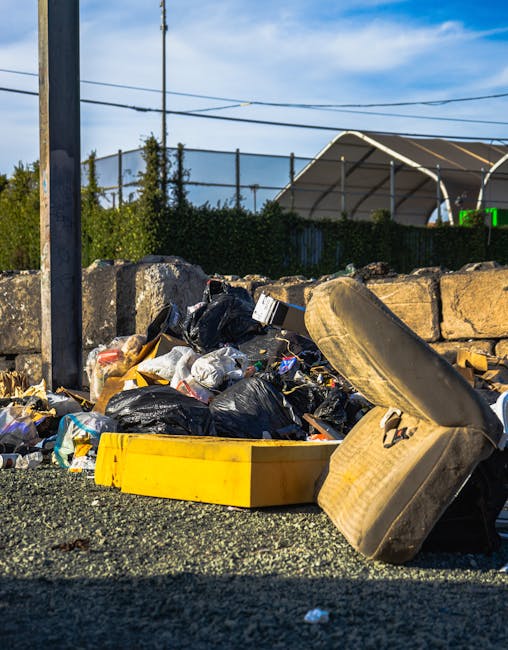
Difficult access rubbish pickups on steep drives in Aldershot

If you live on a steep driveway, know the feeling: the bin bag is at the bottom, the sofa is somewhere near the top, and the path between the two is awkward at best. Difficult access rubbish pickups on steep drives in Aldershot are a very real challenge for homes, landlords, and small businesses alike. The issue is not just getting waste away. It is about doing it safely, without damaging walls, paving, vehicles, or the driveway itself.
In Aldershot, where properties can sit on sloping plots, tight access lanes, or uneven surfaces, rubbish removal needs a bit more planning than a standard kerbside collection. The good news? With the right preparation, equipment, and expectations, it can be straightforward. This guide explains how steep-drive access pickups work, what to watch for, and how to choose the best approach for your property.
Why difficult access rubbish pickups on steep drives in Aldershot matters
Steep access changes everything. A collection that would be quick on level ground can become slow, risky, and noisy on a gradient. Waste trolleys can run away, bags can split, and heavier items become awkward to control. Let's face it, nobody wants a scratched gate or a strained back just to get rid of a broken wardrobe.
For households, the main issue is convenience, but it is also about protecting the property. For landlords and business owners, the stakes can be higher: poor planning can delay move-outs, interrupt operations, or leave waste blocking access. If the rubbish is mixed with bulky furniture, builders' waste, or garden debris, the problem gets bigger very quickly.
It matters in Aldershot because access conditions can vary a lot from one street to the next. Some homes have short but steep drives. Others have narrow bends, low walls, parked cars, or a tight turn into the road. A team doing waste removal needs to think about the whole route, not just the front door.
That is why a proper approach to steep-drive rubbish pickups is more than "send a van and hope for the best." It is risk management, logistics, and common sense rolled into one. And yes, a little patience helps too.
How difficult access rubbish pickups on steep drives in Aldershot works
In practical terms, a difficult access pickup starts with assessment. The crew needs to understand how far the waste is from the vehicle, whether the slope is manageable, and what kind of items are involved. A few light bin bags are one thing. A fridge, old cabinets, and broken plasterboard are another story entirely.
Most reputable clearance teams will want a short description of the access before they arrive. That may include:
- the steepness and length of the driveway
- whether the surface is tarmac, gravel, concrete, or block paving
- space for parking a vehicle safely
- any tight corners, steps, gates, or overhead obstacles
- the type and volume of waste
- whether items are already bagged, stacked, or loose
From there, the collection method is matched to the site. Sometimes the vehicle can park at the top or bottom of the drive and the team carries items carefully by hand. In other cases, a two-person lift, hand truck, sack truck, or staging area is used to reduce strain. The aim is simple: move waste safely without turning the drive into an obstacle course.
For bulky items, the job may be handled as part of a broader service such as house clearance, home clearance, or even furniture clearance if the main issue is sofas, tables, beds, or wardrobes. If the waste is from renovation work, builders waste clearance may be the better fit. Different waste types need different handling, which sounds obvious, but is often missed in a rush.
Sometimes the job is not just difficult because of the slope. It is difficult because of timing. A narrow access route might be fine at 9am, then blocked by cars at lunchtime. That kind of detail matters more than people expect. A good team plans around it rather than treating it as an afterthought.
Key benefits and practical advantages
When steep-drive access is handled properly, the benefits are very tangible. You save time, reduce risk, and avoid the frustration of trying to shift awkward items yourself. A few of the main advantages are worth spelling out.
- Safer handling: trained lifting and careful route planning reduce the chance of injury or property damage.
- Less stress: you do not have to organise neighbours, borrow a trailer, or wrestle a mattress downhill on your own.
- Cleaner finish: waste is removed in one go instead of being dragged back and forth across the property.
- Better access management: the team can adapt to slopes, tight turns, or small parking spaces.
- More suitable for bulky loads: big items that are awkward for standard collection can still be dealt with.
There is also a quieter benefit that people notice afterwards: peace of mind. You know the job has been handled by people who understand the practical reality of the site. That matters, especially if the drive is steep enough to make every step feel slightly ridiculous in wet weather. A small incline becomes a very big deal when you are carrying an old bookcase, truth be told.
If you are comparing services, it may help to review pricing and quotes before booking so you understand how access conditions can affect the estimate. Clear pricing is especially useful when the site needs extra labour, a longer carry, or more time on location.
Who this is for and when it makes sense
This type of service is useful for a wide range of people. The common thread is not the type of property alone, but the difficulty of moving items from point A to point B without drama.
You may need it if you are:
- a homeowner clearing out unwanted furniture on a steep drive
- a landlord dealing with leave-behind items after a tenancy
- a family helping an older relative downsize
- a tradesperson with rubble, timber, or mixed renovation waste
- a business owner needing safe business waste removal from an awkward premises
- someone who wants a one-off clearance rather than a regular bin collection
It also makes sense if you have a combination of access issues. For example: a steep drive, a narrow path, and a heavy item such as a washing machine. That is not rare. It is the sort of real-world mess that turns a "quick tidy-up" into a long Saturday morning.
People often underestimate how much waste volume changes the job. A few bin bags may be manageable by hand. Add a garage full of old tools, a dismantled shed, and some garden offcuts, and suddenly a proper clearance service becomes the smarter option. In that case, a broader service like garage clearance or garden clearance may be the right fit.
Step-by-step guidance
If you want the pickup to go smoothly, a little preparation goes a long way. Here is a simple process that works well for difficult access sites.
- Describe the access accurately. Mention the slope, any sharp turns, surface type, parking limitations, and whether there are steps or gates.
- List the waste type. Separate furniture, general household rubbish, garden waste, and builders' debris in your own mind before you speak to anyone.
- Highlight heavy or awkward items. Wardrobes, white goods, mattresses, and broken panels usually need more care than bags or boxes.
- Check whether items can be moved closer to the entrance. Only if safe, of course. No heroic sliding down a slope in your socks.
- Clear the route. Move bicycles, plant pots, loose hoses, and anything that could trip someone.
- Agree the collection point. Decide whether the team will load from the top of the drive, the bottom, or a midway point.
- Confirm the final scope. Make sure both sides understand what is being removed and what will stay.
One practical tip: if there is a garage, loft, or outbuilding involved, clear those spaces first so you can see the full volume. Services such as loft clearance or office clearance are often more efficient when the items are grouped before arrival.
For properties with a lot of furniture to shift, furniture disposal may be a better route than trying to piece things out yourself. The same goes for larger mixed clearances where the route is difficult but the volume is high.
Expert tips for better results
In our experience, the jobs that run best are the ones where the access was explained honestly from the start. Not exaggerated. Not minimised. Just described plainly. That one habit saves a lot of back-and-forth.
Here are a few expert-level tips that genuinely help:
- Photograph the drive from both ends. A few clear pictures often tell the story better than a long explanation.
- Separate fragile from heavy items. Glass, ceramics, and electronics should not be buried under metal or rubble.
- Watch the weather. Rain makes steep surfaces trickier, especially gravel or smooth paving. Early morning frost can be even worse.
- Keep children and pets away. This sounds obvious, but it matters when a team is carrying bulky pieces on a slope.
- Ask about loading methods. A team using the right equipment will usually work faster and more safely.
Another useful point: be realistic about what can be dismantled on site. Some furniture can be broken down into manageable parts. Some cannot without creating more mess than benefit. That is where a good crew uses judgment, not brute force.
If sustainability matters to you, ask how the waste will be separated and handled. The service pages on recycling and sustainability explain the value of diverting reusable and recyclable materials where possible. That is not just good practice; it often makes the whole process feel tidier and more responsible.
Common mistakes to avoid
The same few mistakes come up again and again on difficult-access jobs. Avoiding them can make the difference between a clean, calm pickup and a frustrating delay.
- Under-describing the slope. "A little steep" can mean very different things to different people.
- Leaving vehicles in the way. One parked car can change the whole access plan.
- Mixing waste types carelessly. Mixed loads are fine when planned properly, but not when everything is piled into one inaccessible spot.
- Assuming all furniture can be carried the same way. A sofa is not a lamp. A wardrobe is not a bin bag.
- Forgetting about the return route. Getting down the drive is only half the job. Getting back up again matters too.
A slightly messy driveway is not the end of the world. But when the surface is slippery or narrow, a small mistake can snowball. That is why planning beats improvisation almost every time.
For anyone dealing with a full property clear-out rather than a one-off item, house clearance or home clearance usually provides a more efficient structure than trying to split the job across several ad hoc trips. Less faff, fewer surprises.
Tools, resources and recommendations
You do not need a garage full of specialist equipment to prepare for a steep-drive pickup, but a few simple tools and habits help a lot. Think practical rather than fancy.
- Heavy-duty rubble sacks or bin bags for lighter waste and loose items
- Sturdy gloves for handling sharp, dusty, or dirty material
- Basic tape and labels to mark what is staying, what is going, and what needs dismantling
- A clear path and good lighting if the collection happens early or late in the day
- Measuring tape for checking whether bulky items will fit through gates or between walls
If the waste includes construction debris, you may want to look at builders waste clearance so the load is handled as mixed heavy waste rather than general junk. That distinction matters because builders' waste often includes denser materials and can require more careful loading.
For customers who need one dependable provider for multiple rooms or spaces, it can help to compare related services before booking. A steep drive affects not only rubbish pickups but sometimes the wider clearance plan too. Garage, loft, flat, and office clearances can all involve awkward access and long carries.
If you are unsure how to describe the issue, start with the simple version: how steep it feels, how far the waste sits from the road, and whether a vehicle can stop safely. That is usually enough for a sensible first assessment. No need to write a novel.
Law, compliance, standards and best practice
With rubbish removal, the main compliance concern is making sure waste is handled by a legitimate carrier and disposed of responsibly. In UK practice, that usually means using a provider that operates with proper care, keeps records as needed, and works in line with common environmental and safety expectations.
For the property owner, best practice is simple:
- do not leave waste in a way that blocks access or creates a hazard
- do not ask people to carry items in unsafe conditions
- provide accurate descriptions of the site
- make sure any agreed removal is clear about what is included
Health and safety should also be taken seriously. Slope, load weight, and manual handling all interact. If a route looks awkward, it probably is awkward. Good operators work around that rather than forcing a one-size-fits-all process. You can read more about the company's approach in its health and safety policy and insurance and safety information.
It is also wise to check the terms before booking, especially if access is unusually difficult or if the load may change on arrival. A clear agreement avoids confusion. The terms and conditions page is there for exactly that kind of clarity.
And for those who care about values as well as convenience, it is reassuring to know how waste is sorted and reused where possible. Responsible disposal is not a nice extra. It is part of the job.
Options, methods, or comparison table
There is no single right way to handle a steep driveway pickup. The best method depends on the items, access, urgency, and budget. Here is a simple comparison to make the choice easier.
| Method | Best for | Advantages | Limitations |
|---|---|---|---|
| Manual carry by hand | Small loads, bagged waste, light household items | Flexible, simple, no special equipment needed | Slower on steep drives, harder with heavy or bulky items |
| Two-person lift and carry | Furniture, appliances, awkward shapes | Safer for heavier loads, more control on slopes | Needs more labour and space to manoeuvre |
| Trolley or sack truck support | Mixed waste where the route is stable enough | Reduces effort, speeds up repetitive trips | Can be difficult on very steep or uneven drives |
| Full clearance service | Whole-room, whole-property, or mixed loads | Efficient, organised, good for difficult access | May cost more than a simple ad hoc pickup |
To be fair, most real jobs use a blend of methods. A team might hand-carry bags, use trolleys for certain items, and dismantle one bulky piece on site. That flexibility is often what makes a difficult access job feel smooth.
Case study or real-world example
A typical Aldershot scenario goes like this. A family is clearing an older property after a move. The driveway is steep, narrow, and just long enough to make every trip annoying. There are two broken wardrobes, a mattress, several bin bags, and a pile of mixed items from the shed. The front gate opens inward, which always seems to happen at the least convenient moment.
Instead of dragging everything out in one chaotic pile, the items are grouped first. Bags are stacked near the top of the drive. The wardrobes are broken down into smaller parts where sensible. The route is cleared of bikes and planters. The team arrives with a clearer picture of the access and the load, so they can work from the safest point rather than improvising halfway through.
The result is not glamorous. Nobody is taking photos of the drive afterwards. But the job gets done without scratched paint, no one has to wrestle a wardrobe down a slope, and the family can actually get on with the rest of the move. Simple, really. And that is usually what people want most.
For similar situations, services like flat clearance and furniture clearance are often relevant because the challenge is just as much about access and handling as it is about waste volume.
Practical checklist
Use this checklist before your collection day. It will save you time and, frankly, a fair bit of grief.
- Have you described the slope clearly?
- Have you mentioned any steps, turns, gates, or low walls?
- Have you listed heavy, sharp, or fragile items?
- Is the access route clear of cars, bins, and garden clutter?
- Are the items grouped together in one sensible place?
- Do you know whether the waste is household, furniture, garden, or builders' material?
- Have you checked the booking details and any terms that may apply?
- Do you have a contact number ready in case the crew needs a quick clarification?
- Have you considered whether separate services such as garage clearance or waste removal would be more efficient?
- Have you thought about recycling or reuse for items that are still in usable condition?
Quick takeaway: the more accurately you describe the access, the easier it is for the team to plan. That one habit can save time, reduce labour, and avoid awkward surprises on the day.
Conclusion
Difficult access rubbish pickups on steep drives in Aldershot are all about preparation, safe handling, and choosing the right method for the site. The slope itself is only part of the story. What really matters is whether the waste can be moved without stress, damage, or unnecessary backtracking.
When you describe the access clearly, group your items sensibly, and use a service that understands awkward driveways, the whole process becomes much more manageable. That is especially true for bulky furniture, mixed household waste, and bigger clearances where the route is not exactly forgiving.
If you are still unsure which approach suits your property, take a calm look at the waste type, the access route, and the time you want saved. From there, the best solution usually becomes obvious. And once it is gone, the drive feels strangely bigger, quieter, and a lot less annoying.
Get a free quote today and see how much you can save.
Frequently Asked Questions
How do difficult access rubbish pickups on steep drives in Aldershot usually work?
They usually start with a short assessment of the access route, the slope, and the type of waste. The team then chooses the safest loading method, which may involve hand carrying, two-person lifts, or equipment for awkward items.
Can bulky furniture be removed from a steep driveway?
Yes, in many cases it can. The main question is whether the item can be carried safely and whether it needs dismantling first. Sofas, wardrobes, and mattresses are common examples.
What details should I give before booking?
Give the slope, distance from the road, surface type, gate access, parking restrictions, waste type, and whether anything is especially heavy. Photos are often helpful too.
Is a steep drive a problem for all rubbish removal services?
Not necessarily, but it does mean the job needs more planning. A service that regularly handles difficult access is usually better prepared than one that only expects easy kerbside collections.
Will a steep drive make the pickup more expensive?
Sometimes it can, because the job may need more labour or take longer. The exact effect depends on the load size, distance, and how straightforward the access is. Clear quotes help here.
What if my driveway is too steep for a vehicle to stop safely?
Then the collection may need to be done from a different point, such as the top or bottom of the drive. The key is to explain that early so the crew can plan the approach safely.
Can I put rubbish at the bottom of the drive before collection day?
Only if it is safe and will not block pedestrians, vehicles, or neighbours. For many households, staging items closer to the entrance helps, but it should never create a hazard.
What kinds of waste are most awkward on steep drives?
Large furniture, white goods, rubble, broken fencing, and mixed builders' waste are usually the trickiest. Loose bags can also become awkward if the ground is wet or uneven.
Do I need to sort the waste before pickup?
Not always, but grouping similar items helps a lot. It makes loading quicker and reduces the chance of fragile items being damaged or hidden under heavier waste.
Is this suitable for house clearances as well as one-off rubbish pickups?
Yes. In fact, steep-drive access is often more common on larger clearances where multiple rooms, furniture, and mixed waste all need moving at once. Services like house clearance or home clearance are often the most practical option.
What should I do if I am not sure the access is safe enough?
Describe the access honestly and ask for guidance before booking. If in doubt, send photos and mention anything that might make handling tricky. It is always better to over-explain a little than to discover a problem on arrival.
Can reusable items be separated from waste during the pickup?
Often, yes. If you have items that are still in decent condition, mention them in advance. Responsible operators will usually try to separate reusable or recyclable material where possible, especially when linked with a sensible recycling approach.